
“Odisha Became My Home, and Gave Me a National Award”: Jhilik
The actress-turned-producer reflects on Lahari's National Award, backing meaningful cinema, and why authentic stories transcend language.
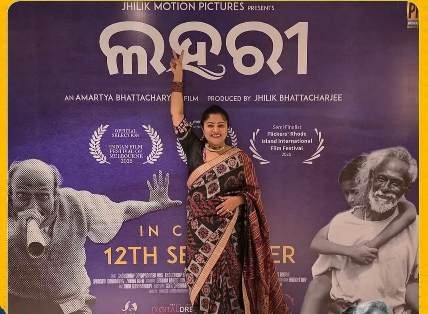
For over a decade, Jhilik Bhattacharjee remained one of the most recognisable faces of mainstream Odia cinema. From romantic entertainers like Akhire Akhire and Love You Hamesha to commercial successes such as Agastya and Tu Mo Hero, she won audiences with her screen presence and performances.
Yet, despite her popularity, one of Indian cinema’s highest honours remained elusive.
Ironically, it was not as an actress but as a producer that Jhilik achieved what many artists spend a lifetime pursuing—a National Film Award.
Her production, Lahari, directed by acclaimed filmmaker Amartya Bhattacharyya, was honoured as the Best Odia Feature Film at the 72nd National Film Awards, marking a defining moment not only in her career but also for contemporary Odia cinema.
Reflecting on the achievement, Jhilik says the announcement felt almost unreal. The first person she called was director Amartya Bhattacharyya, insisting that the honour belonged to the entire team. Soon after, she offered prayers to Lord Jagannath, whom she believes has guided every important milestone in her life.
The journey to Lahari began with a conscious decision to move beyond commercial cinema.
In 2022, Jhilik launched Jhilik Motion Pictures with a vision to champion stories that leave a lasting cultural impact. Under the banner, she backed films such as Rudrani, Dear Purusha, Kiss Miss, Priye Tu Mo Siye, and several others, gradually establishing herself as a producer willing to support diverse narratives.
While searching for her next project, she came across Amartya Bhattacharyya’s critically acclaimed Adieu Godard. Deeply moved by the film, she recognised the filmmaker’s distinctive cinematic voice. A subsequent meeting with Amartya and discussions around Lahari convinced her that this was the story she wanted to bring to the screen.
When he narrated Lahari, she immediately recognised both its artistic strength and the challenges of producing such an unconventional film.
The film explores the changing socio-cultural landscape of Odisha through the lives of a fisherman and a boatman, delicately portraying the conflict between tradition and rapid commercialisation. While many would hesitate to invest in a subject considered commercially risky, Jhilik believed the story deserved to be told.
“Honest storytelling needs no language,” she says, explaining why she never allowed commercial concerns to overshadow the film’s artistic purpose. For her, stories rooted in local culture can resonate globally if told with sincerity.
That belief was validated long before the National Award arrived. During its international festival journey, Lahari connected with audiences who neither spoke nor understood Odia. Yet they responded to its emotions, characters and themes, reinforcing Jhilik’s conviction that authenticity travels beyond linguistic and geographical boundaries.
Her approach as a producer has also been shaped by trust. Rather than interfering with the creative process, she believes in empowering filmmakers.
Once she places her faith in a director, she says, complete creative freedom follows. Her role is not to dictate artistic choices but to ensure that the filmmaker has every possible resource to realise the vision without compromise.
The transition from actress to producer has fundamentally changed her understanding of cinema. Earlier, her responsibility ended with her own performance. Today, she sees the immense effort behind every frame—from script development and production logistics to creative collaboration. The experience has given her a far deeper appreciation of filmmaking as a collective art form.
For Jhilik, Lahari is also deeply personal.
Born and raised in Kolkata, she arrived in Odisha knowing very few people, drawn largely by the state’s rich culture and her fascination with Odissi dance. Over the years, Odisha became home. She built her acting career here, found her family here, embraced motherhood here, and today has earned a National Award for an Odia film.
Looking ahead, she hopes Lahari becomes more than just an award-winning film. She believes its success can encourage greater recognition for rooted Odia stories at national and international platforms, inspiring filmmakers to pursue authentic narratives without compromising their identity.
At the same time, she feels meaningful independent cinema requires stronger institutional support. Films that celebrate Odisha’s culture, heritage and tourism deserve greater encouragement through government backing and financial incentives. She also admits feeling disappointed that Lahari, despite receiving national recognition, was overlooked at the recent Odisha State Film Awards.
Even so, the National Award has only strengthened her resolve.
Jhilik is currently reading several scripts but says she has no intention of rushing into another project. Whether her next venture is an art-house drama, a commercial entertainer or a blend of both, one principle will remain unchanged: every film must begin with a story worth telling.
For an actress who once ruled the box office, the greatest triumph has ultimately come behind the camera. With Lahari, Jhilik Bhattacharjee has demonstrated that courage, conviction and honest storytelling can achieve what commercial formulas often cannot—creating cinema that transcends language, borders and time.