
Odia film ‘Baghuni’ explores gender barriers through a young girl’s dream of performing tiger dance
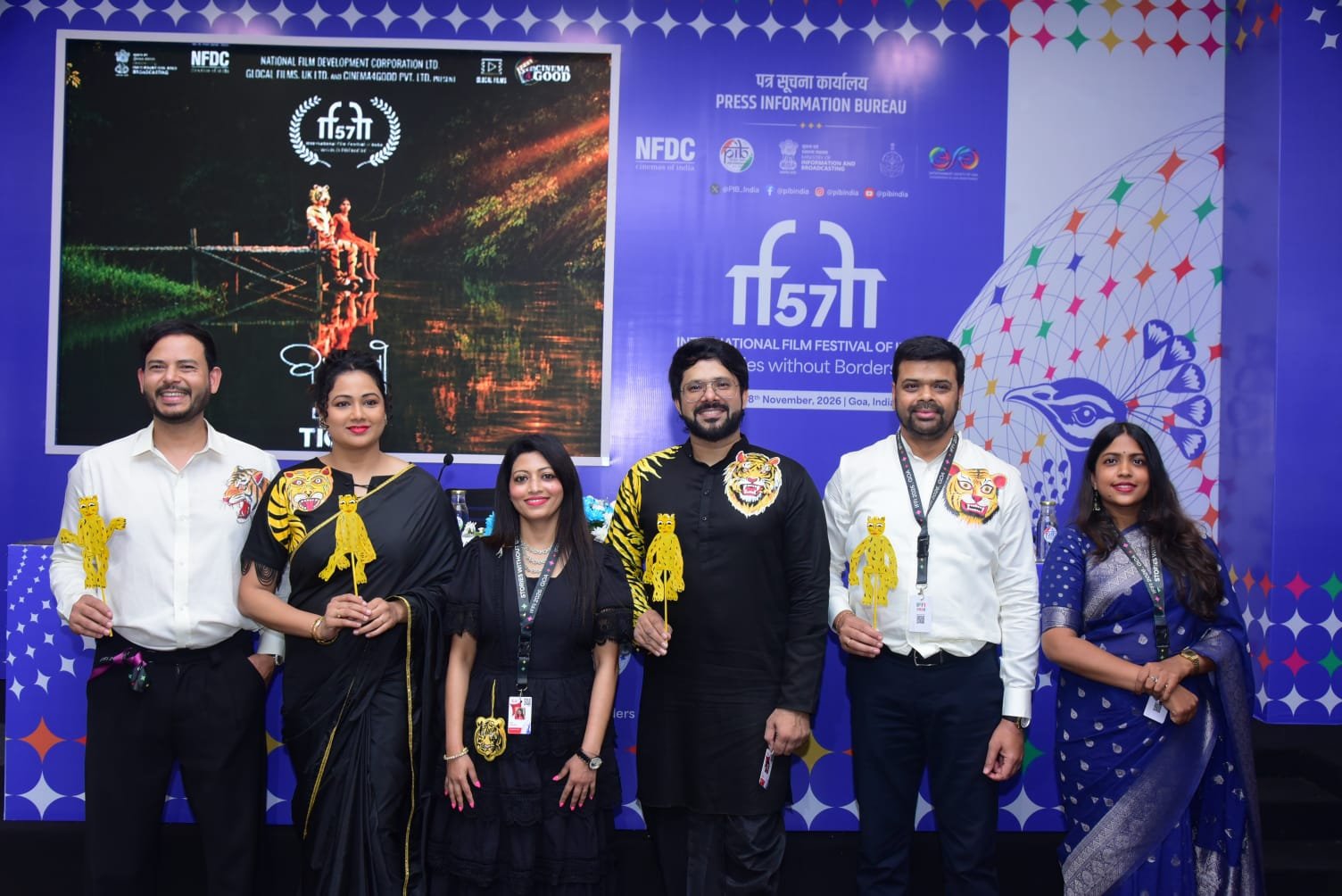
Goa: An 11-year-old girl’s dream of performing the traditional tiger dance, an art form largely dominated by men, forms the heart of Odia film Baghuni (Dance Like a Tiger), which had its gala premiere at the 57th International Film Festival of India (IFFI) in Goa on Sunday.
Written and directed by National Award-winning filmmaker Jitendra Mishra, the film follows Mini, a young girl from a remote village in Odisha, who aspires to become a Bagha Nacha performer. Her journey challenges deep-rooted gender stereotypes and explores the freedom to pursue one’s passion irrespective of societal expectations.
Inspired by true events, Baghuni uses Odisha’s traditional folk art as the backdrop to explore gender equality, cultural identity, social conditioning and the courage to challenge conventions.
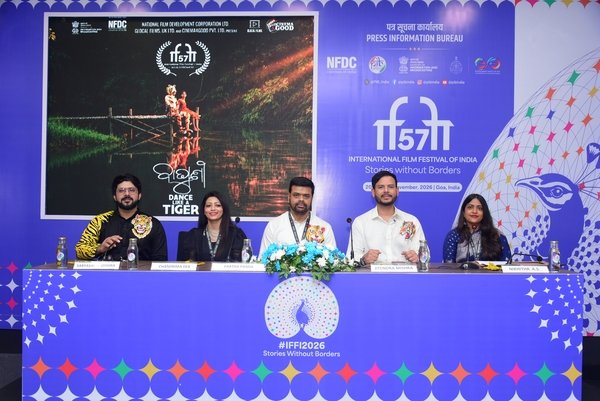
Speaking at a press conference in Goa, Mishra described the film as a personal milestone, marking his directorial debut after nearly two decades in the film industry. He thanked IFFI, the National Film Development Corporation (NFDC) and the Ministry of Information and Broadcasting for supporting the film.
Mishra said the film goes beyond the traditional tiger dance to celebrate equality, courage and the human spirit. Drawing inspiration from seven remarkable women in his family, he said girls could achieve extraordinary things when given equal opportunities.
The film was extensively researched in Berhampur and features local children selected through auditions across Odisha. They underwent months of training alongside actor Sabyasachi Mishra to bring authenticity to the story.
Sabyasachi, who plays a traditional Bagha Nacha performer, described the film as a compelling blend of storytelling and Odisha’s cultural heritage. He highlighted the contrast between Bagha Nacha (tiger dance) and Baghuni (tigress) as central to the narrative.
Recounting his preparation for the role, the actor said he lost 30 kg and underwent rigorous physical and spiritual training. He also spoke about the demanding rituals and hours of intricate body painting involved in the folk art, in which the performer is revered as an embodiment of Maa Bhagabati Budhi Thakurani.
Expressing confidence in the film’s appeal beyond regional audiences, Sabyasachi said Baghuni could set a new benchmark for Odia cinema and urged the media to take its message to audiences across the world.
Producer Partha Panda thanked IFFI, NFDC and the Government of India for providing the film a platform to showcase Odisha’s cultural heritage to an international audience.
Through Mini’s story, Baghuni brings a traditional folk art into a wider conversation on gender equality, identity and the freedom to challenge social norms. The film also aligns with IFFI 2026’s theme, ‘Stories Without Borders’, highlighting how stories rooted in local cultures can resonate with audiences across the world.
The 57th IFFI is being held in Goa from November 20 to 28.